Your Sales Pitch Is a Marriage Proposal on the First Date (And Everyone Can Tell)
Your Sales Pitch Is a Marriage Proposal on the First Date (And Everyone Can Tell)
Let me ask you something:
Would you propose marriage to someone on a first date?
No? Then why the farck are you doing the equivalent in your sales conversations?
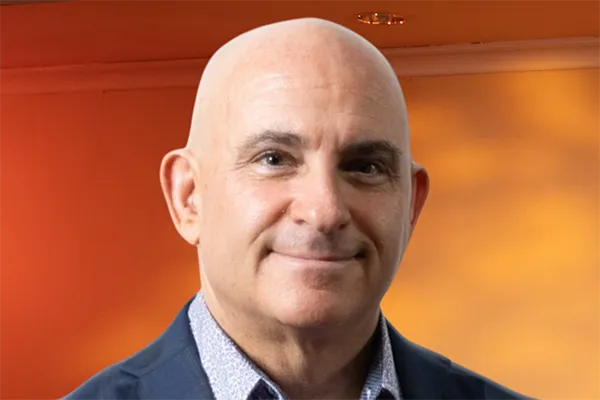
I sat down with Steve Spiro—the "Master Connector" with 30,000+ LinkedIn connections, former art school introvert turned top sales performer—and he nailed exactly what's wrong with most sales professionals:
"People are out there pitching and they're just throwing... it's like basically, hey, we're on a first date. Why don't we get married tomorrow? Like, hello?"
You're meeting someone for the first time. They don't know you. They don't trust you. They sure as hell don't want to buy from you.
And you're asking them to sign a contract.
Then you wonder why your close rate is garbage and people ghost you after one call.
The Fundamentals You've Forgotten
Steve opened with a Vince Lombardi quote that should be tattooed on every sales leader's forehead:
"Fundamentals win ball games."
You know what the fundamentals are? People do business with people they know, like, and trust.
Not people who cold-called them once. Not people who sent a generic LinkedIn message. Not people who jumped straight to the pitch without ever asking a single question about their actual needs.
People they know, like, and trust.
And you can't build that on a first call. You can't manufacture it with a clever sales script. You can't shortcut it with "urgency tactics" or "limited-time offers."
You have to actually give a shaet about the person across from you.
But most salespeople are too focused on what they can GET to worry about what they can GIVE.
The Heart Shift Nobody's Making
Steve's journey is telling. Art school background. Introverted. Became a 4th-degree black belt in karate. Owned a karate studio. Last person you'd expect to succeed in sales.
Then the economy shifted. He had to pivot into sales. And he hated everything sales represented.
"I don't want to be that pushy sales guy. I'm an art guy. The last thing I wanted to be was a sales guy—your typical sleazy salesperson."
You know what changed everything for him?
A mentor who showed him what selflessness looks like. And a book called "The Go-Giver" that flipped his entire approach.
Steve stopped thinking: "What can I get from this person?"
He started thinking: "How can I help this person? What do they actually need?"
That heart shift—from self-focused to others-focused—is what separates top performers from the salespeople everyone avoids.
Most of you are still stuck in extraction mode. Trying to get something from every interaction.
The best salespeople? They're in contribution mode. Trying to give value in every interaction.
And paradoxically, they close more deals.
The Barrier You're Not Breaking
Steve talks about breaking barriers—both physical (from martial arts) and emotional (in sales).
Here's what he sees happening constantly:
You finally get through to that C-level executive. You're on a call or in person with them.
And their arms are folded. Their face is scowling. They're giving you that "what do you got" energy.
That's the barrier. The wall of distrust and skepticism built from years of being pitched by people who don't give a shaet about them.
Most salespeople see this and think: "I need to pitch harder. I need to overcome their objections. I need to close them."
Wrong.
You need to break the barrier by showing you actually care about them. By being genuinely curious about their challenges. By asking questions instead of delivering your canned pitch.
Steve put it perfectly: "It's really refreshing when they can see that you really care about them and you really want to know about them. It breaks a barrier down."
You can't fake this. People have incredible bullshaet detectors.
But when it's genuine? When you're actually there to understand them first? The barrier drops.
And suddenly you're having a real conversation instead of performing a sales theater.
The Wood Before the Fire
Steve used this analogy that captures everything wrong with most sales approaches:
"You don't go to a fireplace and say 'give me the fire, then I'll give you the wood.' You got to put the wood in first and you get the fire."
Most salespeople want the fire (the sale, the commission, the deal) without putting in the wood (the value, the relationship, the understanding).
They want to make withdrawals from a bank account they never made deposits into.
It doesn't work that way.
You have to give first. You have to provide value first. You have to build relationship first.
Then you earn the right to ask for the business.
But this requires patience. And most salespeople are too focused on hitting this month's quota to play the long game of actually building trusted advisor relationships instead of transactional one-off sales.
The Questions You're Not Asking
Steve referenced Dale Carnegie: "If you find out what people want, they'll move heaven and earth to get it."
But you're not going to find out what people want if you're not asking questions. If you're not curious. If you're not actively listening to understand instead of just waiting for your turn to pitch.
Here's what most sales calls sound like:
Salesperson: "Let me tell you about our product..." Prospect: "Actually, we're dealing with—" Salesperson: "Yes! Our product solves that with features A, B, and C..." Prospect: [mentally checks out]
Here's what a good sales conversation looks like:
Salesperson: "Tell me about your biggest challenge right now." Prospect: [explains actual problem] Salesperson: "That sounds frustrating. How is that impacting your team?" Prospect: [opens up more] Salesperson: "What have you tried so far?" Prospect: [shares context]
THEN you can offer a solution. IF you actually have one that fits their needs.
But most of you are so eager to pitch that you skip the entire "understanding" phase and jump straight to "here's what we do."
And you wonder why nobody's buying.
The DISC Personality Framework You're Ignoring
Steve brought up DISC personality profiling, and this is gold for anyone in sales:
D (Driven): Fast-paced, results-oriented, doesn't want details. Get to the point.
I (Inspiring): Enthusiastic, social, wants to connect. Build the relationship first.
S (Supportive): Steady, people-oriented, needs warmth. Make them feel comfortable.
C (Cautious): Analytical, detail-oriented, wants data. Show them the proof.
If you're pitching a D the same way you pitch a C, you're going to lose both.
The D is going to be annoyed you're wasting their time with details.
The C is going to think you're not serious because you didn't provide enough data.
You have to adapt to them. Not make them adapt to you.
This is what Steve means by "selflessness"—it's not about YOUR preferred communication style. It's about THEIR needs, THEIR preferences, THEIR pace.
You can spot personality types on LinkedIn profiles. You can read their communication style in their emails. You can observe their energy in the first few minutes of a conversation.
Then you adjust accordingly.
But this requires being others-focused. And most salespeople are too self-focused to notice.
The Sales Stigma That's Actually Earned
Steve acknowledged something important: Sales has a bad stigma.
Pushy. Sleazy. Manipulative. The copier salesman joke on the evolutionary scale between chimps and orangutans.
And here's the uncomfortable truth: That stigma is earned.
Because most salespeople ARE pushy. They ARE focused on closing instead of serving. They DO use manipulative tactics.
They pitch before understanding. They push before connecting. They close before building trust.
And then they wonder why people hate salespeople.
The opportunity for anyone willing to do it differently is MASSIVE.
Because when you show up selflessly—when you're genuinely there to understand and help—you stand out like a unicorn in a field of donkeys.
People are so used to being pitched at, sold to, and manipulated that when someone actually listens to them? Actually cares about their needs? Actually tries to help instead of just closing a deal?
It's shocking. Refreshing. Trust-building.
And ironically, you close more deals this way than the pushy tactics ever could.
The Long Game Nobody Wants to Play
Steve mentioned guys who've been in sales for 20-30 years and are massively successful.
How?
They've built amazing relationships. They've done right by people for decades. And now people come to them when they need something.
They don't have to cold call. They don't have to pitch. They don't have to convince anyone.
Their reputation does the selling for them.
That's the result of playing the long game. Of prioritizing relationships over transactions. Of being selfless instead of self-focused.
But most salespeople can't see past this quarter. They're so focused on hitting their number that they're willing to burn bridges, manipulate prospects, and force sales that aren't a fit.
Then they start over from zero every quarter because they have no relationship equity built up.
The top performers? They're making withdrawals from accounts they've been depositing into for years.
That's what relationship-driven revenue growth actually looks like.
The Referrals You're Not Getting
Steve brought up something critical:
When you approach sales selflessly—when you genuinely try to help people even if they're not a fit—you get referrals.
"I know you don't need what I have, but I know someone who might need what you offer. Let me connect you."
That person doesn't buy from you. But they remember you helped them. So when they move to a new company and suddenly need what you offer? They call you.
Or they refer you to someone who needs your solution.
This is how you build sustainable business expansion instead of constantly hunting for new prospects.
But you only get this if you're focused on serving people instead of just closing deals.
If you try to force a sale on everyone regardless of fit? You burn bridges. You get no referrals. You start every quarter from zero.
The Law of Reciprocity You're Violating
Steve talked about the law of reciprocity—of sowing and reaping.
You have to plant before you harvest.
Most salespeople want to harvest without planting. They want results without investment. They want trust without earning it.
And they're shocked when it doesn't work.
The universe doesn't operate on "give me what I want, THEN I'll give you value."
It operates on "give value first, consistently, with no expectation of immediate return, and eventually you reap what you've sown."
But this requires patience. And faith. And a genuine desire to serve.
Most salespeople have none of these. They're desperate for the next deal. Desperate to hit their quota. Desperate to prove their worth.
That desperation is the opposite of attractive. It repels people.
The salespeople who are relaxed, confident, and focused on serving? They're magnetic. People want to work with them.
Watch the Damn Episode
This conversation with Steve went even deeper into breaking barriers, building authentic connections as an introvert, and why martial arts discipline translates to sales success.
If you're in sales and tired of the grind, frustrated with low close rates, or just sick of feeling like a pushy asshole—this episode will show you a completely different approach.
Watch the full episode here because Steve's frameworks for building business relationships through selflessness are the antidote to everything that's broken in modern sales.
P.S. That first date/marriage proposal analogy?
Look at your last five sales conversations.
How many times did you pitch your solution before you truly understood their problem?
How many times did you try to close before you built any real trust?
How many times did you treat a first conversation like it should end with them signing a contract?
That's why they're not buying. You're proposing marriage on the first date.
Nobody wants that. It's desperate. It's off-putting. It's the opposite of attractive.
Slow down. Ask questions. Build trust. Then—and only then—offer a solution.
P.P.S. Steve mentioned that sales has a bad stigma, and he's right.
But here's the thing: You can either be part of the problem or part of the solution.
You can be another pushy salesperson who validates why everyone hates sales.
Or you can be the person who shows up differently—who actually listens, who genuinely cares, who helps even when there's nothing in it for you.
The second approach is harder in the short term. But it's infinitely more successful in the long term.
And it's how you build a career instead of just chasing quotas forever.
Go watch the episode. Learn from Steve. And for god's sake, stop proposing marriage on first dates. Build the relationship first. The sales will follow.
Karl Pontau hosts The Human Connection Podcast, where we talk about the stuff that actually matters in business: the humans running it. Because whether you're B2B or B2C, it's really H2H—human to human. Subscribe so you don't miss the next episode where we probably say something that'll make your HR department uncomfortable.


