Stop Pretending Your Team's Productivity Problem is About Office Location (Spoiler: It's About Flow States, Baby)
Stop Pretending Your Team's Productivity Problem is About Office Location (Spoiler: It's About Flow States, Baby)
Fun fact!
If you're still measuring your team's productivity by how many hours their arses are warming office chairs, you're basically that person at the gym taking selfies between sets while the actual athletes are getting shaet done.
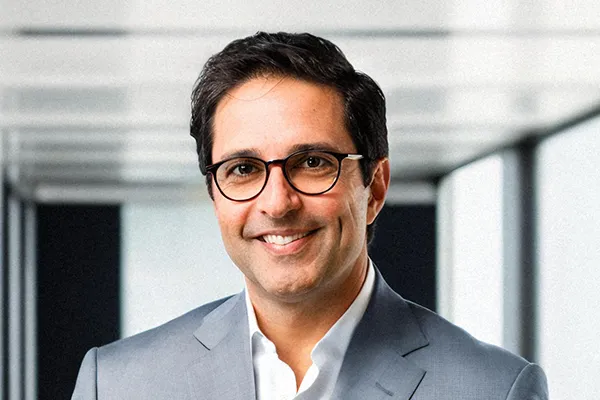
This week, I sat down with Steven Puri—a guy who's done the impossible: he's been a senior exec at Dreamworks, 20th Century Fox, AND Sony, raised $21M in venture funding, AND built remote teams that actually work. (Yeah, I checked his credentials twice too.)
And he dropped some truth bombs that'll make your return-to-office mandate look like the emperor's new clothes.
The Slack Message Industrial Complex Is Killing Your Business
Here's Steven's opening salvo that made me want to stand up and slow-clap:
"When we're in a staff meeting and you walk in and go, 'Actually, yesterday I had some time to think...' and everyone turns their heads like, 'shaet, if we did what Karl said, that actually changes the trajectory of our company'—THAT'S a meaningful moment. That brings you together."
Compare that to: "Hey man, I returned your Slacks yesterday."
Cool story, bro. Want a cookie?
The brutal truth? We've confused activity with impact. We've built entire workplace cultures around the digital equivalent of stapling papers—shallow work masquerading as productivity while the deep work that actually moves needles gets squeezed into "the 18 minutes between Zooms."
(Cal Newport is nodding so hard right now.)
Flow States: Not Just for Michael Jordan Anymore
Steven introduced me to Mihaly Csikszentmihalyi's research on flow states (yes, I had to copy-paste that name), and holy shaet, this changes everything.
You know that feeling when you look up after what feels like 20 minutes and it's been 2 hours? When the work just flows and you produce something that makes you go, "Damn, I should share this with the team"?
That's not magic. That's flow.
And here's the kicker: Picasso said when he was painting Guernica—you know, that little masterpiece—he'd look up and go, "When did all these people get here?" He was so deep in flow that he literally didn't notice people walking into his studio.
Meanwhile, your team is getting pinged every 4.7 minutes with a "quick question" that derails their entire thought process.
We're interrupting Guernicas to ask about lunch orders.
The "Where's Your Butt?" Management Philosophy Needs to Die
Steven put it perfectly: "I honestly don't care if you thought about that [game-changing idea] for 15 minutes at the beach with your dog. If our company takes off because you had that idea, you've created value."
Versus: "Karl, if you're not under the same fluorescent lights with me for 8-10 hours a day, I really don't know that you're working."
One of these is 2025. The other is 1995 calling to ask for its management philosophy back.
The companies crushing it right now? They're not tracking butts in seats. They're creating conditions where deep work happens. They're respecting that some people's brains work better at 6 AM, others at 11 PM, and trying to force everyone into the same 9-5 mold is like making Picasso paint during banker's hours.
The Nike Run Club Mic Drop
This was my favorite moment. Steven was pitching his flow state app idea to a user, and she hit him with this:
"Steven, I can go to Nike and buy shoes. They'll send me a left shoe and a right shoe. Works great. But there are over 100 million people in Nike Run Club. Because when you run together, you run further, you run faster, and you're more accountable."
Chef's kiss.
You want to know what actual human connection looks like in a remote world? It's not mandatory fun Zoom happy hours. It's not forced "water cooler moments" in Slack channels.
It's people working toward something meaningful together, creating an energy field of shared purpose, even if they're in different time zones. It's being the person who picks up your teammate when they're having a "sofa moment." It's that study hall vibe where everyone's grinding on finals—you're not talking, but you're ALL IN IT TOGETHER.
What This Means for Your Scaling Healthtech/Medtech/SaaS Company
If you're trying to grow in today's market while fighting about RTO policies, you're fighting the wrong battle.
The real question isn't "Are my people in the office?"
The real question is: "Am I creating the conditions for my team to do deep, meaningful work that moves this company forward?"
Because here's the thing—your competitors who figure this out first? They're going to attract and retain the talent who can actually think, not just respond to Slack messages.
They're going to build products that matter while you're still debating whether Susan can work from home on Fridays.
Steven's built companies that raised millions. He's worked with the best creatives in Hollywood. And his big insight?
Work is the effect of your actions, not how long they took or where you did them.
Read that again.
Now go create some conditions for flow states, respect your team's humanity, and stop pretending that physical proximity is a proxy for productivity.
Watch the full episode here to hear Steven break down the science of flow states, why location-agnostic workflows are the future (yeah, I'm stealing that phrase), and how to build remote teams that actually feel like teams.
Trust me, it's worth way more than another 30-minute "alignment meeting."
P.S. If you're still making people come to the office to do work they could do anywhere, just so you can see them working... buddy, the problem isn't their location. The problem is your leadership model is from the era when people still used fax machines unironically. And no, buying a ping pong table doesn't fix that.
Karl Pontau hosts The Human Connection Podcast, where we talk about the stuff that actually matters in business: the humans running it. Because whether you're B2B or B2C, it's really H2H, human to human. Subscribe so you don't miss the next episode where we probably say something that'll make your HR department uncomfortable.


