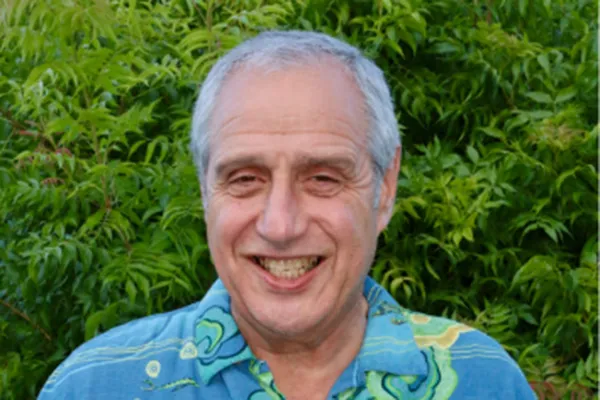
I Just Had Coffee with a Guy Who Hasn't Had a Job in 35 Years (And He's Killing It)
I Just Had Coffee with a Guy Who Hasn't Had a Job in 35 Years (And He's Killing It)
Friend, I know what you're thinking. "Karl, another networking guru? Really? I get 47 LinkedIn requests per day from people who want to 'pick my brain' and then pitch me their SaaS product in 3 minutes flat."
I get it. I really do.
But hear me out, because Robert Butwin just dropped some relationship-building wisdom that hit different. And in a market where your customer retention strategy is the difference between your next funding round and your "we're pivoting" press release, you need to pay attention.
The "Me" vs "We" Mind-Flip That'll Save Your Churn Rate
Here's the thing that smacked me right in the face during our conversation: Robert flips the M upside down to make a W.
Stay with me here.
"ME" becomes "WE."
It's stupidly simple, but when's the last time you walked into a stakeholder meeting thinking about THEM first instead of your product roadmap? When's the last time you asked a client "What are you struggling with?" instead of "Hey, have you seen our new feature?"
Spoiler alert: Your clients don't care about your features. They care about their problems getting solved.
Robert's been full-time networking since 1990 (that's 35 years without a boss breathing down his neck, for those keeping score). And his secret? He starts every single conversation with "Tell me more about what you do, what you're doing to expand, and let me figure out how I can be of value."
Not "Here's my pitch."
Not "Let me tell you about my company."
Not even "So what do you do?" (which, let's be honest, is just LinkedIn small talk masquerading as curiosity).
The Like-Know-Trust Framework Is Dead. Long Live Like-Know-Trust.
Wait, what?
Most people preach "know, like, trust." Robert flipped it: like first, then know, then trust.
His logic? Everyone gets a blank slate. He likes you first, THEN he gets to know you, THEN—and only then—does trust enter the equation.
This isn't some woo-woo positivity bullshaet. It's strategic. Because if you're starting from suspicion, you're burning mental calories on the wrong math problem. You're so busy protecting yourself that you miss the 10X collaboration sitting right in front of you.
(Though real talk: Robert's brother stabbed him in the back. Multiple times. Pioneers get arrows in their backs. But he still shows up with generosity. That's the kind of scar tissue that builds wisdom.)
Your Customers Are Looking for 3 Things (And None of Them Are Your Product)
Robert dropped this truth bomb: People want visibility, credibility, or connectivity.
That's it. That's the list.
They want to be unpacked and speak on stages (visibility)
They want to be taken seriously in their market (credibility)
They want connections to the right people who can unlock their next level (connectivity)
Your job isn't to sell them your health tech platform or your medtech dashboard. Your job is to figure out which of these three they need and deliver it wrapped in a bow made of genuine human connection.
Because here's the uncomfortable truth for all of us scaling companies in 2025: Money doesn't open doors. People do.
You can have the slickest pitch deck, the most impressive runway, and the most elegant architecture—but if you haven't built authentic client connections, you're just another SaaS product in a sea of desperate demos.
The Givers Gain Equation (Or: Stop Being a Taker Before Someone Figures It Out)
"Givers gain" sounds like a motivational poster you'd see in a dental office. But Robert's built an entire career on it, and it works because it's mathematically sound.
When you start every interaction focused on being valuable to the other person FIRST, you're not playing the transactional game. You're playing the relationship-driven revenue growth game. And that game compounds.
One coffee chat leads to an introduction. That introduction leads to a collaboration. That collaboration leads to a client. That client becomes an advocate. That advocate brings you three more clients.
But it all starts with flipping that M upside down.
(And no, I don't mean being a doormat. Robert has boundaries. He knows when enough is enough. But he starts from abundance, not scarcity.)
Why This Matters for Your Company Right Now
Look, if you're a startup executive reading this at 11 PM on a Tuesday because you're worried about your Q1 numbers, I see you.
Your board wants growth. Your team wants direction. Your clients want ROI. And you're in the middle trying to hold it all together with duct tape and good intentions.
But what if—bear with me here—what if the answer isn't another marketing campaign or another feature sprint or another pivot?
What if the answer is just being deeply, genuinely, almost annoyingly focused on human connection in a world that's forgotten how?
Robert mentioned something that stuck with me: He had a premonition in Tiananmen Square that if people built relationships across borders, we'd have a better shot at world peace.
That sounds dramatic. But scale it down to your company: If you build unshakeable relationships with your clients, your team, your stakeholders—if you treat everyone like a human instead of a transaction—you'll have a better shot at sustainable business expansion.
And in this market? That's the only moat that matters.
The Bottom Line (Because Your Board Wants One)
Robert's been networking online since March 2020 changed everything. He's accelerated his reach, stayed home with his wife, and built a global brand without stepping on a plane (United told him he hit 2 million miles. He's done traveling).
The lesson? The relationship management game has changed, but the fundamentals haven't.
Show up. Be consistent. Focus on others first. Ask better questions than "What do you do?" Build like before know. Protect your trust like it's the last asset you'll ever have.
And for the love of all that is holy, stop pitching people in the first three minutes of a conversation.
Your retention rate will thank you.
Your team will thank you.
Your clients will definitely thank you.
And maybe, just maybe, you'll find that building business relationships in the digital age isn't about mastering some new AI tool or growth hack. It's about remembering that every B2B transaction is really H2H—human to human.
Even if we're all doing it on Zoom now.
P.S. If you're reading this and thinking "Karl, this is cute, but I don't have time for relationship building, I need revenue NOW"—that's exactly why your churn rate is 30%. The companies that win in 2025 won't be the ones who sold the fastest. They'll be the ones who connected the deepest. Your move.
Karl Pontau hosts The Human Connection Podcast, where we talk about the stuff that actually matters in business: the humans running it. Because whether you're B2B or B2C, it's really H2H, human to human. Subscribe so you don't miss the next episode where we probably say something that'll make your HR department uncomfortable.


