Not Everyone Needs to Be Your Customer (And That's Your Competitive Advantage)
Not Everyone Needs to Be Your Customer (And That's Your Competitive Advantage)
Building Cybersecurity Teams Across Borders While the World Burns
Picture this: You're on a conference call. Two of your team members realize where each other is from—one's from Israel, one's from Gaza. The Gaza-based team member just lost two sisters in the conflict. They're both texting you simultaneously about the other person.
What do you do?
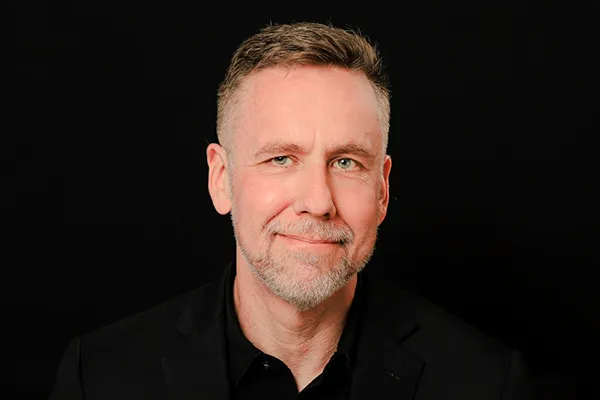
If you're Peter Walker, CEO of NearShore Cyber, you tell them: "You're not Likud. You're not Hamas. You're not Hezbollah. You have no say in any of this. So let's do good work and be human beings."
And then something magical happened. They started concentrating on the work.
Welcome to the most uncomfortable—and most necessary—conversation about building business relationships in digital age that you'll have all year.
The Filter That Saves Your Sanity (And Your Soul)
Peter runs a cybersecurity firm that connects North American enterprises with elite talent across Mexico, the Philippines, Greece, South Africa, and Latin America. When I asked him how he deals with clients who view geography as a significant risk, his answer was gloriously simple:
"I just don't do business with them."
Full stop.
If a potential client considers location or diversity a liability instead of an asset, Peter doesn't try to convince them otherwise. He doesn't craft a persuasive pitch. He doesn't offer reassurances or case studies. He just... doesn't work with them.
This is the opposite of how most scaling companies operate. The conventional wisdom says: Cast a wide net. Never disqualify leads. ABCs—Always Be Closing. Your job is to convert every prospect into a customer.
Bullshaet.
Peter's approach to sustainable business expansion strategies is built on a radical premise: Not everyone should be your customer. And the sooner you get comfortable with that, the stronger your business becomes.
Time Zones, Travel Time, and Feedback Loops That Don't Suck
Here's where most people think global teams are just about cost savings. "Same caliber talent, cheaper"—that's what clients lead with.
But Peter's thinking three levels deeper.
His decision-making process for where to pull talent:
Time zones matter most. Not for the reasons you think. Sure, you want overlap for meetings. But more importantly, you want feedback cycles that don't destroy productivity. Brilliant people in India? Absolutely. But a 14-hour time difference means 48-hour feedback loops. Unless you're hiring 100+ people and can afford an in-country manager, that's a productivity killer.
Travel time creates friction. You're probably not flying to Guatemala to visit one engineer. But if you're hiring ten people? Get on a plane. Mexico City is five hours from NYC. Argentina is 16. That difference matters.
Philippines for night shifts. Customer service excellence, smart people, 14-hour straight time delta. No half-hour nonsense.
Greece for GDPR. Smart consultants with poise who understand European privacy requirements.
South Africa for European nearshore. Great talent, good time zones for Europe, not nearshore on travel time but close enough on feedback cycles.
This isn't just logistics. This is proactive client relationship management at scale—designing your entire operational model around how humans actually work together across distances.
The Anthony Bourdain Business Model
When Peter hit his 50s, finding work got harder. The market for his specific expertise was already narrow, and aging made it narrower. So he started NearShore Cyber thinking it would be simple recruiting in cybersecurity.
Spoiler: It wasn't simple.
But here's where it gets interesting. Peter didn't want to build a traditional recruiting firm. No $200 steak dinners. No golf outings (he hates golf). No wine tastings.
Instead, he asked himself: What would Anthony Bourdain do in cybersecurity?
So he started giving away education. Running AI Tuesdays—accountability groups where people work on AI projects together and hold each other accountable. Building communities of practice. Creating value without demanding immediate transactions.
Sound familiar? This is relationship-driven revenue growth in its purest form.
Peter's marketing strategy is based on a belief he's seen validated across Linux user groups, Meetup communities, and open-source projects: People want to share. They want to give stuff away. They want to be part of something meaningful.
And if you create the conditions for that to happen, the business follows.
The "Queer in Cyber" Podcast and the Power of Polarization
Here's where Peter gets really interesting. He started a podcast called "Queer in Cyber."
People told him that was bold. His response? "Queer people are welcome here."
And then he doubled down:
Immigrants are welcome here.
Political radicals are welcome here.
Artists are welcome here.
All sorts of weirdos are welcome here.
The only requirements? Subscribe to the notion that we're living through a period unlike any in human history. Be willing to share, be kind, be helpful.
And if you're a jerk? "Fuck off." (His words, not mine. Actually, I love it.)
This is strategic polarization—and it's brilliant. Not everyone needs to like Peter or his company. Not everyone should be his customer.
By being explicitly clear about who he is and what he stands for—anti-racist, anti-homophobic, anti-transphobic, pro-immigrant, pro-education, anti-war—he's building a community of people who are with him, in part because they're against the same things he's against.
Most B2B companies would never dream of doing this. They'd sanitize their messaging, stay "neutral," try not to alienate anyone.
And in doing so, they'd fail to humanize business relationships in the way Peter has.
You Can't Dashboard Your Way Out of Human Complexity
Remember that opening story about the Israeli and Palestinian team members?
That's not a situation you can solve with a workflow diagram. There's no Slack integration for grief. No dashboard for geopolitical trauma. No playbook for "How to help team members focus on work when their families are dying."
Peter's solution was beautifully human: Acknowledge the reality. Set clear boundaries about what they can control. Focus on the work that brought them together.
This is what company culture transformation strategies actually look like in practice—not corporate values posters and DEI training modules, but real humans navigating real complexity with compassion and clear boundaries.
When you build global teams, you're not just managing time zones and talent costs. You're navigating:
Religious differences
Political conflicts
Cultural norms that clash
Trauma and loss
Different communication styles
Varying approaches to hierarchy and authority
And you know what? That diversity becomes your competitive advantage.
Not because it looks good in your About Us page. Because it forces you to build systems and cultures that account for human complexity instead of pretending it doesn't exist.
The Long Game: Equal Pay for Equal Work Globally
Peter's vision is audacious: Someday, someone doing dev ops in Benin, Livermore, or London will be paid the same.
Same money for the same job. Regardless of geography.
He knows this probably won't happen in his lifetime. And he's okay with that. Because it means the work involves more than just him.
This is the kind of trusted advisor relationships that actually change industries—not because you're extracting maximum value in your lifetime, but because you're building infrastructure for the future.
Most executives can't think past the next quarter. Peter's playing a multi-generational game.
And while he's at it, he's building lifeboats for the people who share his vision.
The Marketing You Actually Want to Do
Here's what kills me about Peter's approach: He's doing marketing that he actually wants to do.
No soul-crushing cold calls.
No manipulative funnels.
No performance theater for metrics that don't matter.
He's running AI Tuesdays where people learn together. He's creating podcasts that explicitly welcome marginalized communities. He's building global teams that let people work together despite living in conflict zones.
And clients come to him.
This is what authentic client connections look like when you stop trying to be everything to everyone and start being something specific to someone.
The Uncomfortable Truth About Who Deserves Your Service
Most business advice tells you to be accommodating. Say yes. Be flexible. Don't disqualify leads.
Peter's approach? If you see diversity as a liability, you don't deserve to work with his company.
That's not just noble—it's strategic.
Every hour you spend trying to convince xenophobic clients that global teams are okay is an hour you're not spending serving clients who already get it. It's stakeholder-focused communication taken to its logical conclusion: stakeholders who don't align with your values aren't actually your stakeholders.
By filtering aggressively on the front end, Peter builds a client base that:
Values what he values
Trusts his expertise
Doesn't question every decision
Becomes part of his community instead of just a revenue source
This is how you build high-retention client relationships that survive market disruption—you start with clients who share your foundational beliefs about how business should work.
Want the Full Story?
Watch the complete episode with Peter Walker on The Human Connection Podcast where we dive deeper into:
How to use polarization strategically without being an asshole
The practicalities of managing teams across 14-hour time zones
Why Anthony Bourdain is a better business model than Gary Vee
Building community through education instead of extraction
The real costs and benefits of global talent strategies
Trust me, Peter's got stories that'll make you rethink everything about how you're building your company.
P.S. I know what you're thinking: "But Karl, we can't just turn away potential customers! Our investors would kill us. We need to grow!"
Cool. Chase every lead. Try to be everything to everyone. Build a company with no soul and clients who'll leave you the second someone offers a 5% discount.
Or... you could take a page from Peter's playbook and build a business where:
Your values filter your customer base instead of vice versa
Your marketing is stuff you'd do anyway because it's meaningful
Your team can focus on doing good work instead of managing assholes
Your growth comes from community instead of conversion optimization
The counterintuitive truth? You grow faster when you're willing to say no.
Because every "no" to the wrong client is a "yes" to deeper relationships with the right ones. And in an era where everyone's chasing scale at all costs, building something sustainable and human-centered is your actual competitive advantage.
Now go audit your client list. How many of them would you actually want to have dinner with? How many share your values? How many are there because you were afraid to say no?
Yeah. That's what I thought.
Time to build some lifeboats. 🚤
Karl Pontau hosts The Human Connection Podcast, where we talk about the stuff that actually matters in business: the humans running it. Because whether you're B2B or B2C, it's really H2H—human to human. Subscribe so you don't miss the next episode where we probably say something that'll make your HR department uncomfortable.


