AI Made Your Emails Perfect. Now Nobody Trusts Them. (Welcome to the Trust Apocalypse)
AI Made Your Emails Perfect. Now Nobody Trusts Them. (Welcome to the Trust Apocalypse)
Or: Why the "great equalizer" just made human connection in B2B relationships the only thing that farcking matters
Here's a fun fact that should terrify every SaaS exec reading this: The five biggest companies in the world—Nvidia, Apple, Google, Amazon, Microsoft—all see AI as a bigger evolution than the internet itself.
Let that sink in while you're still debating whether to use ChatGPT for your email outreach.
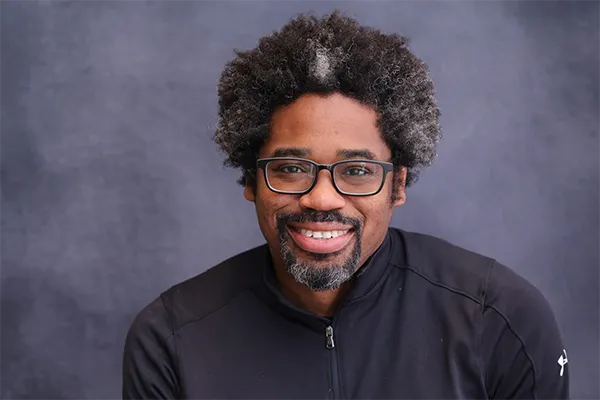
I just sat down with Jason Michael Perry, founder of Perry Labs and the brain behind "AI in a Minor" (yes, he used AI to compose classical music with the Baltimore Symphony Orchestra, because apparently some people aren't playing small). And what he told me is going to make every "AI will solve everything" consultant lose their shaet.
Because here's the plot twist nobody saw coming: AI is making everything so good that nothing stands out anymore. And that's exactly why you're about to get your arse handed to you by competitors who understand what actually matters.
The Great Equalizer Is Coming for Your Lunch
Jason calls AI the "great equalizer." And he's not wrong.
That phishing email that used to have seventeen spelling errors and read like a drunk toddler wrote it? Now it's indistinguishable from the real thing. That salesperson who could barely string together a coherent sentence? They can now craft hyper-personalized outreach that sounds like they went to Harvard.
Everyone can suddenly produce "good" content.
Which means "good" is no longer good enough.
When everyone's email is perfectly written, when everyone's LinkedIn post is flawlessly structured, when everyone's pitch deck looks like it came from a top-tier agency—how the farck do you stand out?
Jason nailed it: "Your attention is the most valuable resource in the world, and it's limited."
And here's what most executives are completely missing: In a world where AI equalizes quality, trust becomes the only currency that matters.
Trust Is Dead. Long Live... Wait, What?
Here's the uncomfortable reality: Trust is at an all-time low across every digital medium.
Is that social media post real? Is that video actually the CEO speaking or AI-generated? Is that email from a real person or a bot? Is that phone call authentic or automated?
You know what's happened? We've automated ourselves into a trust apocalypse.
And this is where most companies are making a catastrophic mistake. They're doubling down on digital outreach right when everyone's developing AI-detector paranoia.
Meanwhile, the smart money? They're booking flights. They're hosting in-person events. They're shaking actual hands. They're having real conversations where you can see the person's face and know—at least for now—they're not a cyborg.
As Jason put it: "There's something that you can see, that you can touch, that you can feel. You know that this place where you can trust your senses in a way that you might not be able to in a digital world."
This isn't about going back to the Stone Age. This is about understanding that when digital channels become saturated with perfect-but-soulless content, authentic client connections become your only sustainable business expansion strategy.
The $1 Billion One-Person Company (And Why Your Personal Brand Better Be Legit)
Jason dropped this bomb: He believes we'll see a one-person company hit $1 billion in valuation.
One person. Orchestrating AI tools. Building a billion-dollar business.
If that doesn't make you rethink everything about scaling client success teams and company culture transformation strategies, I don't know what will.
Because here's what happens when AI flattens organizations and makes small teams competitive with enterprise: Personal brand becomes everything.
Not your company's sterile mission statement that sounds like it was written by a committee having simultaneous strokes. Not your perfectly optimized LinkedIn posts that could have been written by literally anyone (or anything).
Your actual, genuine, human personal brand.
The one that shows up consistently online AND in person. The one that makes people say "Yeah, I met them at that conference and they're exactly like their content—actually interesting and not full of corporate bullshit."
Because when there are thousands of consultancies and small businesses competing for attention, all using the same AI tools to create the same quality of content, what makes someone choose YOU?
You. The actual human. The one who shows up. The one whose handshake is real. The one whose story resonates because it's actually yours.
AI Composed Music for the Symphony. It Was... Missing Something.
Jason's "AI in a Minor" project is the perfect metaphor for everything wrong with how most companies are using AI.
They used AI to compose original classical music in the style of Mozart and Philip Glass. Professional musicians from the Baltimore Symphony Orchestra performed it. Technically impressive? Absolutely.
But here's what the musicians said afterward: Something was missing.
The soul. The cohesive story. That ineffable quality that makes classical music actually mean something instead of just being technically correct notes in the right order.
Sound familiar?
Because that's exactly what your AI-generated content feels like to your prospects. Technically correct. Perfectly optimized. Completely soulless.
Jason calls it the "uncanny valley"—that thing that goes off in our minds when something doesn't quite feel right. When the email is too perfect. When the social post is too polished. When the pitch feels like it came from a template (because it did).
Your prospects can smell it. Your clients can sense it. Your team can feel it.
And they're all slowly backing away from your "relationship-driven revenue growth strategy" that has zero actual relationship in it.
The AI-Native Generation Is Coming (And They'll Eat Your Lunch Too)
Here's the final kick in the teeth: The generation coming up behind us will be AI-native. They've never known a world without these tools. They've never struggled to write a decent email. They've never had to manually create a spreadsheet pivot table.
Which means their bullshit detectors are going to be calibrated differently.
What passes for "authentic" today won't work with them. The sniff test will evolve. The things that signal "real human connection" will shift.
But you know what won't change? The fundamental human need for genuine connection. For stories that actually mean something. For relationships built on trust, not automation.
The companies that figure this out now—that understand how to use AI to handle the rote tasks while doubling down on humanizing business relationships—those are the ones that will dominate.
The companies that keep trying to automate their way to authentic? They're the new Sears, watching Amazon eat their lunch and insisting "we don't have to worry about that."
So What the Farck Do You Do About It?
Here's your action plan for sustainable business expansion strategies in the age of AI:
1. Use AI for the shaet that doesn't require soul. Admin tasks. Data analysis. Research. First drafts. Let the robots handle the rote work.
2. Triple down on the things AI can't fake. In-person meetings. Real conversations. Stories that actually matter. The parts that require an actual human who gives an actual shaet.
3. Build your personal brand like your business depends on it. Because it does. Post content that sounds like you actually wrote it (because you did). Show up consistently. Be the same person online and offline.
4. Create proactive client relationship management that's actually proactive. Not automated check-ins. Real conversations. Genuine interest. Stakeholder engagement strategies that engage actual stakeholders, not just their inboxes.
5. Make it obvious you're human. In a world where everything can be faked, the ability to prove you're real becomes a competitive advantage. Host events. Do video calls. Meet face-to-face. Be present.
6. Tell better stories. Not AI-generated content that hits all the SEO keywords but says nothing. Real stories. With real stakes. That create real emotional connection. Like Jason's symphony—except make sure yours has soul.
The Bottom Line (For Everyone Who Scrolled to the End)
AI didn't kill the need for human connection. It just made it exponentially more valuable.
The great equalizer elevated everyone's baseline. Which means the only way to differentiate is through the things that can't be automated: genuine relationships, authentic connection, real human experiences.
Your competitors are using AI to send more emails. You should be using AI to free up time for better conversations.
Your competitors are automating everything they can. You should be investing in the things that matter precisely because they can't be automated.
Your competitors think AI is the solution. Smart money knows that AI just made building business relationships in the digital age the only solution that matters.
The choice is yours. Automate your way to mediocrity, or use AI to amplify your humanity.
Just don't be surprised when the companies that chose "real" over "perfect" end up owning your market.
P.S. If you're reading this thinking "but our AI-generated content performs well," you're measuring the wrong thing. Engagement metrics don't equal trust. Clicks don't equal relationships. And optimization doesn't equal authenticity. Your content might be getting views, but are those views converting to trusted advisor relationships? Or are people just scrolling past because they can't tell your content from everyone else's perfectly polished AI garbage? There's a difference between getting attention and earning trust. Figure out which one you're actually building.
P.P.S. Jason said something that should keep you up at night: "This is the same thing of Sears looking at Amazon and saying, I don't have to worry." If you think AI is just a tool that won't fundamentally change how business works, you're the Sears in this scenario. The question isn't whether AI will disrupt your industry. The question is whether you'll be the disruptor or the disrupted. And right now, the companies winning are the ones using AI to become more human, not less.
Want to hear the full conversation with Jason Michael Perry about AI as the great equalizer, trust in the digital age, and why your personal brand matters more than ever? Check out the complete episode of The Human Connection Podcast. Jason shares insights from composing AI music with the Baltimore Symphony Orchestra, predictions about billion-dollar one-person companies, and why the trust apocalypse is actually your biggest opportunity—if you know how to use it.
If this resonated (or made you uncomfortable because you recognize yourself in it), share it with another executive who's still thinking AI will automate their way to success. Spoiler: it won't.
Karl Pontau hosts The Human Connection Podcast, where we talk about the stuff that actually matters in business: the humans running it. Because whether you're B2B or B2C, it's really H2H—human to human. Subscribe so you don't miss the next episode where we probably say something that'll make your HR department uncomfortable.


