Your Team Thinks You're Full of It (And They're Probably Right)
Your Team Thinks You're Full of It (And They're Probably Right)
Don't freak out but: Your "vision statement" is collecting dust in a PowerPoint somewhere, and your employees couldn't recite it if their stock options depended on it.
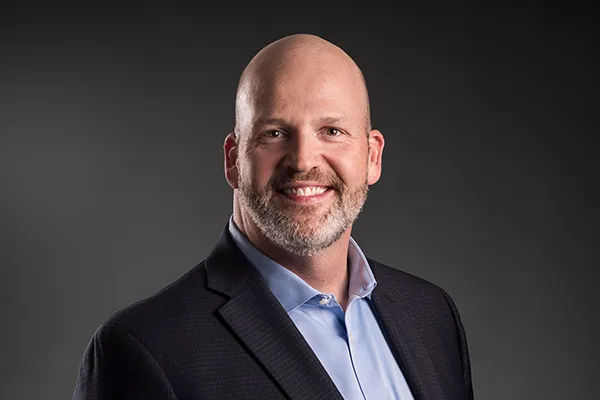
I sat down with Dusty Holcomb—five-time Ironman finisher, CEO whisperer, and generally the kind of human who makes the rest of us look like we're sleepwalking through leadership—and he dropped some uncomfortable truths about why your scaling company feels like pushing a boulder uphill while wearing Crocs.
The Real Bottleneck Isn't Your Tech Stack (It's You)
Here's the thing nobody wants to hear at your next leadership offsite: You are the bottleneck.
Not your outdated CRM. Not your "legacy systems." Not even that VP who still thinks fax machines are cutting edge.
It's you. And me. And every other leader who thinks they've communicated the vision because they mentioned it once in a Q3 all-hands while everyone was checking Slack.
Dusty breaks it down beautifully: When leaders don't have clarity for themselves, they can't build alignment with their teams. And without alignment, your execution strategy is basically just expensive chaos with a budget line.
It's like that old manufacturing book "The Goal"—except instead of identifying bottlenecks in factory production, we're identifying bottlenecks in the leadership production line. Spoiler alert: it's usually the person at the top who hasn't done the internal work.
Five Questions Your Team Should Answer (Without You in the Room)
Dusty shared this framework that's so simple it's almost offensive to every overcomplicated business consultant charging $500/hour:
1. Why are we here? (Beyond making money, genius) 2. Where are we going? (The vision thing) 3. How are we getting there? (The actual plan) 4. Where do I fit in? (What the hell is MY role?) 5. What's in it for me? (And no, "competitive salary" doesn't cut it)
Now here's the kicker: If you can't leave the room and have your team answer these questions consistently, you haven't actually communicated anything. You've just had an expensive thought exercise that made you feel productive.
One of Dusty's clients realized they'd gotten so clear on their vision that it actually enabled their organization to say NO to things. Revolutionary concept, right? Clarity gives you permission to stop doing stupid shaet that doesn't move the boat faster.
(Shoutout to the British rowing team that asked "Will this make the boat go faster?" before every decision. They ended a 100-year losing streak. Your quarterly initiatives should be this focused.)
Stop Treating Your Employees Like NPCs
Here's where we get into the uncomfortable zone that makes HR nervous: Your people aren't video game characters who execute commands. They're humans with emotions, ambitions, and a finely-tuned bullshaet detector.
The difference between transactional leadership and relational leadership is the difference between someone showing up to collect a paycheck and someone giving you their discretionary effort—that magical extra 20% that separates good companies from great ones.
You know what unlocks discretionary effort? Connection.
Not ping pong tables. Not "casual Fridays." Not even free La Croix in the break room.
Connection to meaningful work. Connection to a purpose that matters. Connection to leaders who actually give a damn about them as humans, not as "resources."
Dusty put it perfectly: "The greatest leaders are not looking to transactionally unlock effort. They're looking to unlock discretionary effort. And the only way—the ABSOLUTE only way—you get that is by connecting that person's value system to work that matters."
The Numbers Will Look Good When You Stop Chasing the Numbers
This is going to sound counterintuitive to every CFO reading this, but stick with me:
Your obsession with quarterly metrics is killing your long-term growth.
When you cut corners to make the numbers look pretty, when you automate past the point of humanity, when you treat your team like line items instead of the literal humans who make your company exist—you're undercutting your own success.
Companies become slaves to the wrong success metrics. They underestimate the intrinsic power of taking care of their team members, who then take care of customers, who then take care of the bottom line.
And they get so internally focused on what THEY'RE doing that they forget to stay externally motivated by what the customer actually wants and needs.
Here's a wild thought: If all your employees didn't show up tomorrow, you wouldn't have a company. You'd have a very expensive collection of software licenses and a lease on office space nobody uses.
The business IS the people. Full stop.
The Long Game Beats the Quick Win Every Damn Time
Dusty mentioned this book "Good Profit" by Charles Koch (yes, that Koch), and it hit different: What are you actually creating for the customer? How do you build durable, sustainable profit streams instead of churning through customers like they're disposable?
In today's market—where AI is churning out mediocre everything, where competition is one Google search away, where customer acquisition costs are through the roof—you can't just be transactional anymore.
You have to build relationships. Real ones. The kind where customers stick around past the first renewal because they actually believe in what you're doing.
Because here's the brutal truth: If your customers will leave you for the next 20% discount your competitor throws at them, you have no moat. You're just another commodity in a sea of sameness, spinning your wheels with no traction.
The Rebar & Concrete Reality Check
Look, you can have all the best systems, tools, and AI agents in the world. But if you haven't invested in human relationships—both internally with your team and externally with your customers—you're building on sand.
This is the H2H approach (human to human, not B2B) that actually scales. It's the rebar and concrete model where relationships are the structural integrity that holds everything else up.
Dusty's been doing this for 25+ years—leading high-growth orgs, running CEO cohorts, finishing Ironmans like it's a casual hobby—and the pattern is clear: Leaders who get clarity for themselves, communicate it obsessively, connect with their teams relationally, and focus on long-term value creation are the ones who actually scale without burning out.
Everyone else is just making expensive noise.
Watch the Full Episode (Seriously)
This conversation went deep into leadership bottlenecks, the five questions framework, why your team probably can't articulate your vision, and how to build the kind of sustainable growth that doesn't require sacrificing your humanity at the altar of quarterly earnings.
Dusty Holcomb brings that rare combination of practical execution experience and genuine wisdom about what makes humans tick. Plus, the guy's completed five Ironmans, so he clearly understands endurance better than most of us understand our own company values.
If you're a CEO, founder, or senior leader in Health Tech, Med Tech, or SaaS trying to scale without losing your mind (or your best people), this episode is required viewing.
P.S. If you read this and thought "Well, OUR team is aligned and everyone knows our vision," I dare you to test it. Walk into a random department tomorrow and ask someone to explain the company's purpose, vision, and how their role contributes to it. If they nail it without hesitation, I'll eat my words. If they stammer through some vague corporate-speak they half-remember from onboarding, well... maybe it's time to do the work.
The boat only goes faster when everyone's rowing in the same direction. And they can't row in the same direction if they don't know where the hell the boat is going.
PPS: Yeah, I said "hell" in a business blog. Because we're humans talking to humans here, and humans sometimes need real talk, not sanitized corporate speak. If that bothers you, LinkedIn's algorithm is probably more your speed. For everyone else—welcome to The Human Connection. Let's build something real.
Karl Pontau hosts The Human Connection Podcast, where we talk about the stuff that actually matters in business: the humans running it. Because whether you're B2B or B2C, it's really H2H—human to human. Subscribe so you don't miss the next episode where we probably say something that'll make your HR department uncomfortable.


