Your Leadership Is Bankrupt Because You Keep Making Withdrawals Without Deposits
Your Leadership Is Bankrupt Because You Keep Making Withdrawals Without Deposits
Let me ask you something:
What happens when you make more withdrawals from your bank account than deposits?
Penalties. Fees. Overdraft charges. Bankruptcy.
Now ask yourself: What happens when you make more withdrawals from your employees than deposits?
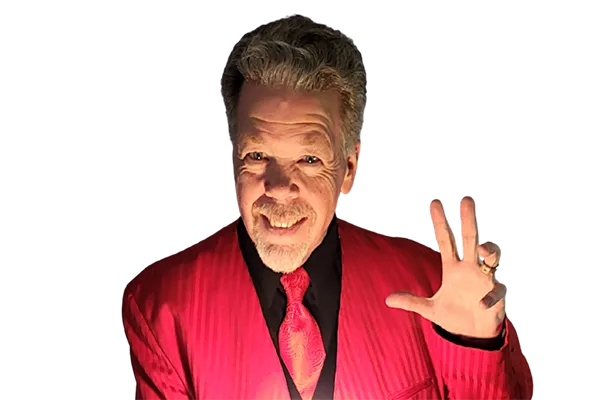
I sat down with Dean Hankey—leadership expert and master of human connection—and he broke down exactly why most leaders are emotionally bankrupt with their teams and don't even know it.
You're making withdrawals constantly:
Asking them to work late
Demanding more output
Adding to their responsibilities
Expecting them to figure it out
Taking their good work for granted
And you're making zero deposits.
Then you wonder why engagement is low, turnover is high, and nobody seems to give a shaet anymore.
You're broke. Relationally bankrupt. And it's showing in your results.
The "No Mind Reading Zone" You're Not Living In
Dean opened with something that should be obvious but clearly isn't:
"We can live in what we refer to as a no mind reading zone. I'm talking about explicit, not implicit, but explicit connection and communication."
You know what most leaders do?
They assume people know what they're thinking. They expect employees to read between the lines. They get frustrated when people don't understand expectations that were never clearly communicated.
That's not leadership. That's lazy.
Dean did this exercise where he wrote down a word and asked if I knew what it was. Obviously not. The word? "No."
But here's the thing: "No" is an incomplete word. It should be K-N-O-W.
When you KNOW people, you KNOW success.
But most leaders don't actually know their people. They know their job titles. Their responsibilities. Maybe their background.
They don't know:
Their struggles
Their strengths
What motivates them
What stresses them out
What they value
What they need to succeed
And without knowing this, you can't serve them. And if you can't serve them, you can't lead them.
The Leadership Goal Nobody's Teaching
Dean dropped this line that should be on every leadership development program curriculum:
"As a leader, our job is no more complicated than leading so well that we as leaders become unnecessary and irrelevant."
Read that again.
Your goal as a leader is to make yourself unnecessary.
Not indispensable. Not the smartest person in the room. Not the only one who can make decisions.
Unnecessary.
Because if your team can't function without you, you haven't built a team. You've built a dependency.
You've created a situation where:
Every decision requires your input
Nothing moves without your approval
People are afraid to act without checking with you
Your vacation causes organizational chaos
That's not leadership. That's a bottleneck with a title.
The best leaders? They train people so well, support them so thoroughly, and empower them so completely that the organization might even work better without them.
That terrifies most leaders. Because they've tied their ego to being needed.
But it's the only way to scale. The only way to build sustainable growth. The only way to actually lead.
The "Favorite Things" Application That Changes Everything
Here's a strategy so simple it's almost offensive that more companies aren't doing it:
When you hire someone, ask them about their favorite things.
Favorite snack. Favorite holiday. Favorite whatever.
Seems innocuous, right?
Now here's the magic: When you catch that person doing something great—when they go above and beyond, solve a problem, help a teammate—you show up with their favorite thing.
Dean's example: His favorite snack is peanuts. Imagine someone sidling up to you and saying:
"Hey, you're doing a great job. You're really making this organization level up. I really appreciate you. Go nuts."
And they hand you a can of peanuts.
That's not a generic "good job." That's a personalized acknowledgment that says: "I see you. I know you. And I care enough to remember what matters to you."
Most companies do this:
Generic "employee of the month" plaques
Standardized gift cards
Impersonal recognition emails
It's lazy. It's unmemorable. It doesn't work.
The companies winning on retention and engagement? They know their people well enough to make recognition personal and meaningful.
But that requires actually caring. And most leaders are too busy to care.
The VIP Framework Most Businesses Do Backwards
Dean shared a framework that explains why most businesses fail at building authentic client connections and trusted advisor relationships:
VIP: Value → Impact → Profit
That's the order it should work:
1. Add Value (for others, not yourself) 2. Generate Impact (create results for them) 3. Then Profit (emotionally, relationally, financially)
But here's what 99.9% of businesses actually do:
PIV: Profit → Impact → Value
"Pay me first, then maybe I'll give you some value that might deliver some impact."
Show up to work → Get paid → Maybe then deliver value.
Buy my product → Give me money → Maybe then you'll get value.
It's completely backwards.
The businesses and leaders who win? They add value FIRST.
They serve their employees before expecting performance.
They help their customers before asking for the sale.
They make deposits before making withdrawals.
And paradoxically, they profit more than the people doing it backwards.
The Bank Account You're Overdrafting
Dean's metaphor is perfect:
"Find a way to make more deposits than withdrawals."
Most leaders are making constant withdrawals:
Taking people's time
Demanding more output
Adding responsibilities
Expecting extra hours
Using their emotional labor
Without making deposits:
Recognition
Support
Resources
Development
Care
What happens when you overdraft a bank account?
Penalties. Fees. Eventually, you go bankrupt.
What happens when you overdraft your relationships?
People disengage. They quiet quit. They leave for competitors who actually make deposits.
You go relationally bankrupt.
And you can't understand why "nobody wants to work anymore" when the reality is nobody wants to work for someone who only takes and never gives.
The Red Carpet Treatment That's Not Actually Ridiculous
Dean shared this idea that sounds over-the-top:
Imagine showing up to work Monday morning and there's a red carpet. Fifty people with cameras. Taking your picture like you're at the Oscars. "Oh my gosh, Karl, you're here! Can I get your autograph?"
Your first reaction is probably: "That's ridiculous. That's theatrical. That's not realistic."
But Dean's point isn't that you need to literally do this (though some companies have).
His point is: When did being nice and doing good become a strategy?
When did showing people they matter become something we have to schedule and plan?
It should be the way we eat, sleep, drink, breathe, interact.
But we've beaten it out of our culture. We've decided that "professional" means "distant." That "business-like" means "impersonal."
And we're wondering why engagement is at an all-time low.
The companies that win? They make people feel like they matter. Every day. In small ways and big ways.
Not because it's a strategy. Because they actually care.
The Language That Changes Everything
Dean called out something most leaders miss:
"I'm so glad you're part of this family" vs. "I'm glad you're one of our employees."
"Our champions and rockstars" vs. "Our customers and clients."
Change your language, change your impact.
Language shapes perception. And perception shapes behavior.
When you call employees "family" and customers "champions," you're signaling:
These relationships matter
These people are valued
This is more than transactional
When you use corporate terminology like "human capital" and "customer acquisition," you're signaling:
People are resources to be optimized
Relationships are transactions
This is purely business
Most leaders don't think their language matters. But it's broadcasting your values to everyone around you.
The Choosing Mechanism Nobody's Using
Dean said something profound about relationships:
"You fall in love, to elevate, over and over and over. There's a choosing mechanism."
Most leaders treat relationships like they're static:
You hire someone
They're on your team
That's the relationship
Wrong.
You have to choose to invest in the relationship every single day:
Choose to recognize them
Choose to celebrate them
Choose to serve them
Choose to support them
Choose to help them
Just like in a marriage—you don't fall in love once and then coast. You choose to fall in love over and over.
Most leaders aren't choosing. They're coasting. Taking people for granted. Assuming the relationship maintains itself.
Then they're shocked when people leave.
You didn't tend the relationship. You didn't make deposits. You didn't choose to invest.
Why would they stay?
The Servant Leadership Trend That's Not Actually New
Dean mentioned that servant leadership is being called a "trend" for 2025.
Let's be clear: This isn't new. This is how humans have always worked best.
What's new is that we're finally waking up to the fact that:
Command-and-control doesn't work anymore
People have options and they'll exercise them
The companies that care about people win
Servant leadership is being called a "trend" because most companies have been doing it wrong for so long that doing it right looks revolutionary.
The companies embracing this? They're going to attract the best talent, retain them longer, and build better cultures.
The companies clinging to the old model? They're going to keep cycling through bodies and wondering why "nobody wants to work."
The Solitary Confinement You're Creating
Dean nailed something fundamental:
"We are created for relationship. We are created to be in connection with other human beings. Solitary is punishment for a reason."
Yet most workplaces create emotional solitary confinement:
Remote work without real connection
Offices where everyone's siloed
Cultures where vulnerability is weakness
Environments where it's "just business"
Then you wonder why people are disengaged, depressed, and leaving.
You've created an environment that goes against our fundamental wiring as humans.
We need connection. We need to be seen. We need to be known. We need to belong.
Companies that provide this? They win.
Companies that treat people like interchangeable resources? They churn.
Watch the Damn Episode
This conversation with Dean went even deeper into the care-is-magic philosophy, practical strategies for making employees feel valued, and why being nice should be automatic, not strategic.
If you're struggling with retention, engagement, or building a culture people actually want to be part of—this episode is essential.
Watch the full episode here because Dean's frameworks for building business relationships through genuine care are the foundation for sustainable business expansion that doesn't require constantly replacing people.
P.S. That bank account metaphor?
Audit your last week. List every withdrawal you made from your team:
Extra work requested
Deadlines imposed
Expectations raised
Time demanded
Now list every deposit you made:
Recognition given
Support provided
Resources allocated
Care demonstrated
If your withdrawals outnumber your deposits, you're running a deficit. And eventually, you'll go bankrupt.
The solution isn't complicated: Start making more deposits.
But it requires actually caring. And most leaders are too focused on results to invest in the relationships that create results.
P.P.S. Dean's point about leading so well you become unnecessary?
That terrifies you, doesn't it?
Because you've built your identity around being needed. Being the expert. Being the one with the answers.
But that's ego. Not leadership.
Real leadership is developing people so thoroughly that they don't need you. Building systems so robust that your absence doesn't create chaos. Creating cultures so strong that they self-perpetuate.
That's how you scale. That's how you build something sustainable.
But it requires letting go of the need to be indispensable. And most leaders would rather be needed than be effective.
Go watch the episode. Learn from Dean. And for god's sake, start making deposits before your entire team declares bankruptcy and leaves for companies that actually care about them.
The math is simple: More deposits than withdrawals. Value before profit. Care before results.
Everything else is just details.
Karl Pontau hosts The Human Connection Podcast, where we talk about the stuff that actually matters in business: the humans running it. Because whether you're B2B or B2C, it's really H2H—human to human. Subscribe so you don't miss the next episode where we probably say something that'll make your HR department uncomfortable.


