Your Customers Don't Give a Shaet About Your Funnel (And Other Things Chelsea Burns Taught Me About Belonging)
Your Customers Don't Give a Shaet About Your Funnel (And Other Things Chelsea Burns Taught Me About Belonging)
Hold onto your butts: We're all out here treating humans like SQL queries, and it's farcking us up.
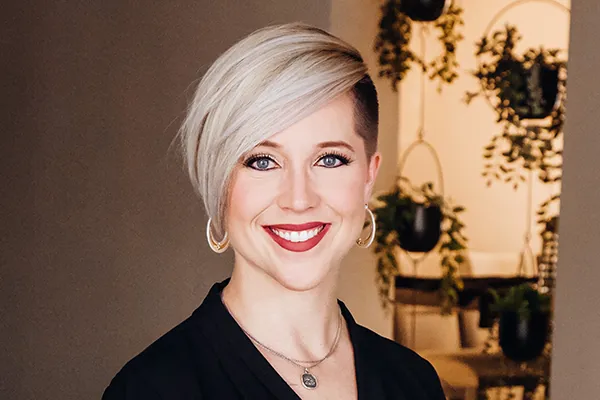
I sat down with Chelsea Burns this week—marketing psychologist, belonging researcher, founder of two companies, and the kind of person who publishes papers with titles that make academics uncomfortable—and she basically called out the entire B2B world for committing slow-motion relationship suicide.
Her research? Female entrepreneurs and belonging. Her vibe? "Stop being weird robots and just be people." Her framework? An actual roadmap for not sucking at human connection while still hitting your numbers.
The Part Where Science Tells Us We're Idiots
Here's the kicker: Chelsea dropped this bomb about belonging being as important to our health as food. Not "kind of important" or "nice to have." Like, Maslow-put-it-in-his-hierarchy-of-needs important. Miss-it-and-your-body-literally-breaks-down important.
And what are we doing in B2B? We're over here calling people "leads." We're automating the humanity out of every touchpoint. We're stripping language of emotion because some finance bro in 2008 decided feelings don't belong in the boardroom.
Chelsea's research shows that when belonging drops, so does cognitive function, physical health, and—oh yeah—your customer's desire to keep giving you money.
But sure, let's keep obsessing over that 3% conversion rate lift while our churn looks like a hockey stick going the wrong direction.
"Just Be a Person" Is Apparently Revolutionary Now
The most devastating part of our conversation? When Chelsea said, "My best advice is just be a person."
That's it. That's the framework that makes consultants millions. Just. Be. A. Person.
If that sounds stupidly simple, it's because it is. And yet somehow we've all forgotten how to do it. We've let that muscle atrophy while we got really good at A/B testing subject lines and building attribution models that require a PhD to understand.
Chelsea calls this the "OG operating system"—back when your face was your logo and your reputation was your brand. You lived in a village. You treated people well or you got ostracized. Pretty solid incentive structure if you ask me.
Fast forward to 2025: We're hiding behind chatbots, automated sequences, and "Sorry, we're experiencing higher than normal call volumes" (translation: we fired customer service to goose the margins).
The BELONG Framework (Because You Asked)
Chelsea just dropped a brand new framework called BELONG, and before you roll your eyes at another acronym, hear me out:
Behavioral science
Empathy-driven engagement
Leveraging nature and neuroscience
Organic strategies (not just paying the algorithm gods)
Narrative and neuromarketing messaging
Guided transformation
Here's what I love about this: It's not "throw out your CRM and go hug a tree." Chelsea literally builds funnels, calculates CAC, and knows exactly how much money it takes to convert at each stage.
But she layers humanity underneath all that machinery. She uses psychology to power the engine, not manipulate people into clicking "buy now."
It's pre-strategy. It's the light showing you where to point all your fancy tools so they actually build relationships instead of just processing transactions.
The Warmth & Competence Test You're Probably Failing
Quick quiz: When a prospect first encounters your brand, they're subconsciously asking two questions:
Are you going to be nice to me or hurt me? (Warmth)
Are you smart enough to do either? (Competence)
That's it. That's the whole game according to "The Human Brand" (shoutout Chris Malone and Susan Fiske).
So tell me: Does your homepage scream "WE SEE YOU AS A HUMAN" or "DOWNLOAD OUR WHITEPAPER AND GET INTO OUR NURTURE SEQUENCE"?
Yeah, I thought so.
The Value Aspiration Thing That Made My Brain Explode
Chelsea dropped this concept called "value aspiration identification" and honestly, it should be tattooed on every marketer's forehead.
She uses Nike as an example: Sure, you buy the shoes because they look cool. And yeah, they'll help you be healthy and hit the gym.
But the value aspiration? "I want to be healthy enough to play with my grandkids someday."
THAT'S the transformation you're selling. Not moisture-wicking fabric. Not arch support. The version of themselves they're trying to become.
When's the last time your messaging connected to that level? When's the last time you even asked what your customer's grandkid-equivalent aspiration is?
Why This Matters More Than Your Q4 Numbers
Here's the uncomfortable truth: Your competitors are all optimizing the same funnel. They're all using the same marketing automation. They're all creating the same "personalized" (read: variable fields) email sequences.
The companies that will win aren't the ones with better tech. They're the ones that make people feel like they belong.
In health tech, where you're dealing with actual human health outcomes? In medtech, where trust is literally life and death? In SaaS, where switching costs are dropping every quarter?
Belonging is your moat.
Customer retention goes up 25-95% when you increase it by just 5%. (Yes, I read the SEO doc. No, I'm not just throwing numbers around.) But you can't retain people who never felt connected to you in the first place.
The Part Where I Tell You What To Do
Watch the full episode. Not because I told you to, but because Chelsea breaks down how to actually do this stuff. She's not selling fluffy feel-good BS—she's a researcher who also runs two companies and knows where the bodies are buried.
She talks about:
Why marketing psychology isn't manipulation (when you do it right)
How to create psychological safety in your customer relationships
The interconnectedness of business that everyone pretends doesn't exist
Why metaphor and storytelling hit different than feature lists
And honestly? She makes me feel less crazy for building a whole podcast around "maybe we should treat humans like humans."
The frameworks are in the show notes. The research is real. The ROI is measurable.
But more importantly: Your team is burned out from pretending to be robots. Your customers are exhausted from being treated like data points. And you're tired of wondering why your "best practices" aren't working anymore.
Maybe it's time to just be a person.
Check out the full episode. Thank me later. Or don't—I'm not your boss.
P.S. If you're reading this thinking "but my CFO would never approve 'just be a person' as a strategy," congratulations—you've identified the exact problem Chelsea's talking about. Show them the health research. Show them the retention data. Or better yet, show them this post and let's all agree to stop pretending that stripping humanity from business was ever a good idea. We're all just people trying not to die alone, and that includes your customers. Act accordingly.
Now go build something that makes humans feel like they belong. Your Q4 numbers will thank you.
P.P.S. Chelsea released the BELONG framework the same day we recorded this. The woman doesn't mess around. Link's in the show notes. You're welcome.
Karl Pontau hosts The Human Connection Podcast, where we talk about the stuff that actually matters in business: the humans running it. Because whether you're B2B or B2C, it's really H2H—human to human. Subscribe so you don't miss the next episode where we probably say something that'll make your HR department uncomfortable.


