Your Leadership Team Is Running at 50% Capacity and Honestly? It Shows.
Your Leadership Team Is Running at 50% Capacity and Honestly? It Shows.
Sorry, not sorry: Most of you are managing people like it's still 1987 and Gordon Gekko is your spirit animal.
And it's killing your growth.
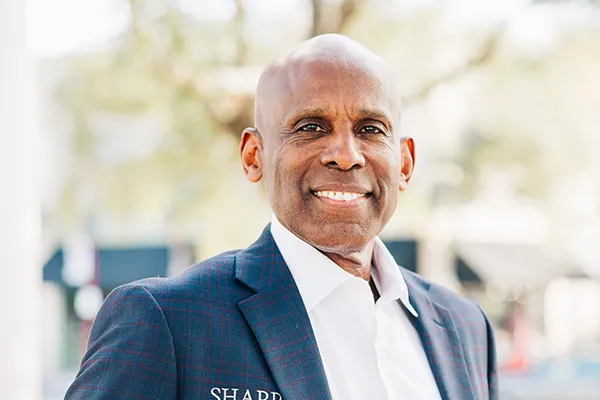
I sat down with Carl Sharperson this week—Naval Academy grad, former Marine Corps pilot, cancer survivor (twice, because apparently once wasn't enough of a plot twist), and the guy who turned a union manufacturing plant with illiterate workers and ancient equipment into the best-performing facility in a four-plant system.
Yeah, you read that right.
Here's What We Talked About (And Why You Should Care)
Carl dropped this bomb early in our conversation: Most leaders operate at 50% capacity. Not because they're stupid or lazy, but because they've been fed this toxic mythology that leaders need to have all the answers, show zero vulnerability, and somehow bootstrap their way to success like some kind of Silicon Valley superhero.
It's bullshaet. And it's expensive bullshaet.
The "Self-Made" Leader Myth Needs to Die
Carl and I bonded over cancer survival—because nothing says "good podcast vibes" like comparing notes on fighting stage 4 non-Hodgkin's lymphoma and brain tumors. But here's what cancer teaches you real quick: You're not making it through alone.
When you're lying in a hospital bed and you're not smart enough, rich enough, or powerful enough to control what happens next, you learn something profound: You need other people. You always have.
The whole "self-made millionaire" thing? Fiction. Drop any of these supposed self-made entrepreneurs naked in the woods with zero human knowledge, and they're dead in 72 hours. We're fundamentally interdependent creatures, and pretending otherwise is the kind of leadership delusion that creates quiet quitting, 80% disengagement scores, and customer churn that keeps your CFO up at night.
The Real Leadership Transformation Nobody's Talking About
Carl shared his experience at the Center for Creative Leadership where they ran this genius simulation: They had executives role-play like they were at home, not in the office.
Why? Because—surprise!—people don't suddenly become different humans when they walk through your office door. That thing we call "work-life balance"? It's a lie. There's just life. And if your team member has a special needs child or can't find reliable childcare, that's not separable from their "work performance." It's all the same person.
The leaders who get this—the ones who proactively reach out, who actually give a damn about the whole human in front of them—unlock performance levels that make your current metrics look like amateur hour.
The Part Where This Gets Practical (Because Philosophy Doesn't Pay Invoices)
Carl ran a union facility where:
Workers could only do one job (union rules)
20% of the workforce was illiterate
Equipment was older than most startup founders
Everyone assumed it would be a disaster
He made it the best-performing plant in the system.
How? Not with some fancy new tech stack or aggressive KPIs. He did it by valuing people, communicating clearly, getting their input, and helping them grow.
Wild concept, I know.
This is the same guy who will straight-up tell your team: "If you see something that needs fixing, tell me immediately. And if I can help you with your outside-of-work problems, I will—because when you're supported as a whole person, you'll break down walls for this company."
Why Your Competitors Are Eating Your Lunch
While you're optimizing your sales funnel and obsessing over your CAC:LTV ratio, your team is quietly quitting because they don't feel seen, heard, or valued. And that energy—or lack thereof—radiates directly to your customers.
You can't build unshakeable client relationships when your own team relationships are held together with passive-aggressive Slack messages and mandatory fun Fridays.
Carl's first book, Sharp Leadership: Overcoming Adversity to Lead with Authority and Authenticity, was the first book a 17-year Marine Corps veteran with PTSD and substance abuse issues read cover to cover. It literally helped him go from homelessness to running a shelter for homeless veterans.
If it can do that, imagine what it could do for your VP of Sales who's burning out or your customer success team that's drowning in churn.
The Bottom Line (For Those Who Skipped to the End)
We're in the middle of market chaos. AI is eating everyone's lunch. Economic uncertainty is the only certainty. Your customers have more options than ever and less patience for mediocrity.
You need every single person on your team operating at 100%, not 50%. You need customers who are so deeply connected to your company that they'd follow you through a market downturn.
And you can't get there by being the "smart" leader who has all the answers. You get there by being the authentic leader who builds real relationships—with your team, your customers, your stakeholders—and creates an environment where human connection isn't a nice-to-have, it's the competitive advantage.
Because at the end of the day, whether you're B2B or B2C, you're really H2H: Human to Human.
And the humans are tired of being treated like resources.
Watch the full episode with Carl Sharperson [here] to hear the stories I couldn't fit, including the mission trip revelation that changed his whole perspective and why opening up people's minds is the secret to every type of workshop from strategic planning to diversity initiatives.
P.S. If reading this made you uncomfortable, good. That means something resonated. The question is: Are you going to do something about it, or keep running your team at half-capacity and wondering why your retention numbers look like a crime scene? Your move, chief.
Karl Pontau hosts The Human Connection Podcast, where we talk about the stuff that actually matters in business: the humans running it. Because whether you're B2B or B2C, it's really H2H, human to human. Subscribe so you don't miss the next episode where we probably say something that'll make your HR department uncomfortable.


