Your Marketing Dashboard Is Lying to You (And Your Customers Know It)
Your Marketing Dashboard Is Lying to You (And Your Customers Know It)
Why "Learn More" Buttons Are Destroying Your Business
Look, I get it. You've spent the last five years building the perfect attribution model. You can tell me exactly which $47 LinkedIn ad generated $2,847 in pipeline. Your dashboards are chef's kiss beautiful. Your CFO actually smiles during budget meetings.
And yet... your churn rate is climbing faster than your blood pressure during earnings calls.
Want to know why?
Because you forgot there are actual farcking humans on the other side of your "conversion optimization funnel."
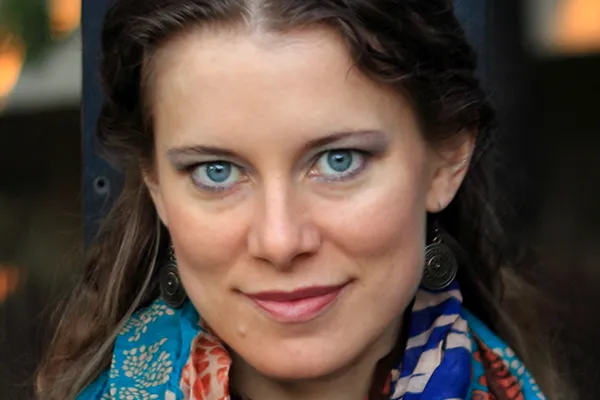
This week on The Human Connection Podcast, I sat down with Ashley Faus—marketer, writer, musical theater nerd, and the person who's about to ruin every "Learn More" button in your digital ecosystem. Ashley's new book on human-centered marketing is dropping in May, and honestly, it couldn't come at a better time. Because right now, most B2B marketing feels like getting catfished on a dating app, except instead of fake beach photos, it's generic CTAs and bait-and-switch content.
The Dashboard Addiction Is Killing Your Relationships
Ashley hit me with this truth bomb that had me cackling: "It's not a row on a spreadsheet. It's not a dollar in a dashboard. It's a human that had a problem and they needed a solution."
Damn.
Here's what's happening: We've gotten so obsessed with attributing every single action to every single dollar that we've completely lost sight of the fact that building business relationships in digital age requires, you know, actually treating people like people instead of data points.
Think about it. When you boil down all your customer relationships to transactions, you become incredibly vulnerable. Someone comes along with a shiny new offer or a 10% discount, and your "loyal customers" ghost you faster than a bad Tinder date. Why? Because you never built an actual relationship—you built a transaction engine.
And people can feel that shaet, even if they can't articulate it.
The "Learn More" Button Is a Trust Grenade
Ashley dropped what might be the most actionable advice I've heard all year:
"Remove all 'Learn More' CTAs from your emails, websites, blog posts, LinkedIn posts. Quit saying 'Learn More.'"
Why? Because "Learn More" is the marketing equivalent of "We need to talk." It creates anxiety. Am I going to get pricing? Talk to sales? Register for a webinar? Download a 47-page PDF that I'll never read? Get added to seventeen nurture sequences?
I don't know what's going to happen when I click that button, so I'm not clicking it.
When you're vague about your intentions, you're essentially doing a bait-and-switch. And bait-and-switches destroy trust. This is the opposite of authentic client connections—it's manufactured ambiguity designed to game metrics instead of serve humans.
Want to build trust? Be explicit about what happens next.
"Get Pricing" means I'm getting pricing
"Talk to Sales" means I'm talking to sales
"Read the Case Study" means I'm reading a case study
Wild concept, I know. Treating people like adults who can make informed decisions.
Marketing Is Live Theater, Not a Spreadsheet
Here's where Ashley's background as a musical theater performer comes in clutch. She told this story about performing in Cinderella, holding a tray of fake pastries during rehearsal (you know, mime-style), and then on opening night—with the actual tray and full costume—someone grabs her arm and the whole thing goes flying into the orchestra pit.
Pastries everywhere. Potential violinist casualty. Total chaos.
Her point? This is what marketing actually looks like.
We try to plot out these perfect linear journeys—awareness, consideration, decision, retention—like we're choreographing a Broadway show. We build our dashboards around this fantasy that humans will move through our funnel in an orderly, predictable fashion.
They won't.
People are messy. They loop around. They come in sideways. They ghost you for six months and then show up ready to buy on a random Tuesday. Your perfectly mapped "customer journey" is actually a tangled knot of unpredictable human behavior, and the sooner you accept that, the better.
Ashley calls it reimagining the audience journey as a playground instead of a funnel. Not just customer journeys. Not just buyer journeys. Audience journeys. Because—plot twist—not everyone in your audience is a customer, and pretending they are is precisely why your relationship-driven revenue growth strategy keeps faceplanting.
The Ensemble Performer Mindset
What I loved about Ashley's theater background is how it translates to humanizing business relationships. In ensemble theater, you're constantly switching costumes, changing characters, adapting to whatever's happening live on stage.
Marketing needs the same energy.
Your audience doesn't care about your org chart. They don't know (or care) that Marketing owns awareness, Sales owns conversations, and Customer Success owns retention. They just want their problem solved by someone who gives a shaet about them as a human being.
When you approach people as whole humans first—and then as potential buyers, potential employers, potential collaborators—you create something way more valuable than a transaction. You build community. You create advocates. You develop sustainable business expansion strategies that don't require you to constantly replace churned customers with new ones.
The Trust Equation Nobody's Solving
Ashley nailed something critical: People buy from people they trust, and they trust people like themselves.
But here's the paradox: If you constantly show up trying to extract maximum value from buyers, they're immediately defensive. They tune out because they assume all your content is sales content. The second you mention your product, they think you're selling them something, so they disengage.
But at the same time, they crave true expertise and authentic experience. They want to know your story. They want to understand how you solve problems.
So how do you bridge that gap?
Explicitly sell when you're selling. And give people the option to choose a non-buying path.
Crazy, right? Actually being honest about your intentions builds more trust than being sneaky about them. When people know you're not constantly trying to extract value from every interaction, they're more likely to engage when they are ready for a sales conversation.
This is the foundation of proactive client relationship management—creating space for genuine connection instead of treating every touchpoint as a conversion opportunity.
Stop Making Your Customers Victims of Your Content
From a storytelling perspective, Ashley dropped this gem: "The only characters that don't grow over the course of a story are victims."
If your marketing is all about extracting value—you're the buyer, I'm going to get you to buy from me no matter what—you're essentially making people victims of your content. They're not growing. They're not benefiting. They're just being mined for revenue.
No one wants to be the victim of your quarterly targets.
When you see people as whole humans first, you empower everyone to have beneficial relationships in more robust ways than just monetary transactions. You build community around your brand. And that community becomes your competitive moat when markets get disrupted and competitors come sniffing around with discount offers.
This is how you create high-retention client relationships that actually survive market volatility.
The Bottom Line (That Your Dashboard Can't Measure)
Ashley's book is called human-centered marketing, but really, it's about getting back to what marketing was always supposed to be: matching problems and solutions for people.
Not matching dashboards to revenue targets.
Not matching attribution models to budget allocations.
People. With problems. Who need solutions.
The companies winning right now aren't the ones with the fanciest martech stacks or the most sophisticated attribution models. They're the ones building genuine human connection in B2B relationships—treating their audience like the complex, messy, unpredictable humans they actually are.
Your customers aren't spreadsheet rows. They're people who can tell when you're full of shaet. They can feel when you're extracting instead of serving. And they're tired of clicking "Learn More" buttons that take them to sales pages when they just wanted to read a blog post.
Want to see the full conversation?
Watch the complete episode with Ashley Faus on The Human Connection Podcast where we dive deeper into:
The playground framework for audience journeys
How to build trust without being weirdly vulnerable
Why your linear funnel is a fantasy (and what to do about it)
Practical steps to make your marketing feel less gross
Trust me, it's worth the listen. Ashley brings the energy, the frameworks, and the tactical advice you can actually implement on Monday morning.
P.S. I know what you're thinking: "But Karl, our board expects to see attribution! We can't just abandon our metrics!"
Cool. Keep your dashboards. Track your metrics. Measure your ROI.
But maybe—just maybe—spend some of your energy remembering that behind every data point is a human being who's tired of being treated like a conversion opportunity. Your dashboards should inform your strategy, not replace your humanity.
Also, go audit your website right now. Count how many "Learn More" buttons you have. Then ask yourself: Would you click that button if you actually didn't know what was going to happen next?
Yeah. That's what I thought.
Now go fix it. 🎭
Karl Pontau hosts The Human Connection Podcast, where we talk about the stuff that actually matters in business: the humans running it. Because whether you're B2B or B2C, it's really H2H—human to human. Subscribe so you don't miss the next episode where we probably say something that'll make your HR department uncomfortable.


