Your Brain Is Actively Sabotaging Your Success (And You Don't Even Know It)
Your Brain Is Actively Sabotaging Your Success (And You Don't Even Know It)
Let me hit you with an uncomfortable truth:
80% of your thoughts are happening below the conscious level. And most of them are working against you.
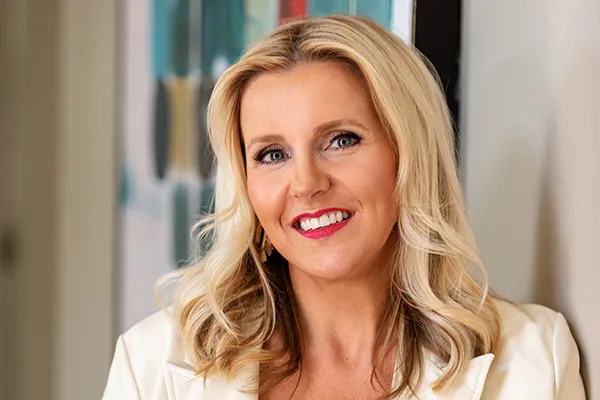
I sat down with Amy Kemp—certified Habit Finder coach who's worked with over 400 business leaders—and she explained why your business plateaus, your energy crashes, and your growth stalls have nothing to do with market conditions or your strategy.
It's your subconscious thought habits. The same ones that helped you survive are now killing your growth.
And before you dismiss this as "soft skills" or "not relevant to real business"—Amy's worked with hundreds of leaders who've transformed their businesses by addressing this exact issue.
Here's the kicker: These thought habits were useful once. They helped you launch. They got you off the ground. But if you keep operating the same way past the inflection point, you're going to crash and burn.
Literally.
The Airplane Analogy That Explains Everything
Amy dropped this metaphor that perfectly captures what's happening to most entrepreneurs:
"The energy and thinking it takes to get a business off the ground—if you continue to think and operate that way past the point of reaching cruising altitude, you will crash and burn just like an airplane would."
It takes massive fuel to get a plane off the ground. Maximum thrust. All engines firing.
But once you reach cruising altitude, if you keep burning fuel at that pace? You run out of gas mid-flight.
Same with your business.
The habits that got you from $0 to $1M:
Working 80-hour weeks
Doing everything yourself
Being in constant hustle mode
Making every decision personally
Never delegating
Those same habits will destroy you on the path from $1M to $5M.
But here's the problem: You don't realize you're still burning launch fuel.
Because it's subconscious. It's automatic. It's how you've wired your brain to operate.
And unless you actively identify and shift these thought patterns, you'll keep grinding yourself into dust while wondering why growth feels so hard.
The Thought Habits You Didn't Know Were Killing You
Amy focuses specifically on subconscious habits of thinking. Not morning routines or time management systems.
The deeper stuff. The 80% of thoughts happening below conscious awareness.
Here's what makes this so insidious: These habits helped you survive at some point.
Fear of change? That kept your ancestors from wandering into predator territory.
Perfectionism? That helped you stand out when you were building your reputation.
Obligation thinking? That pushed you to deliver when nobody else believed in your idea.
But past the point of needing them, these habits become detrimental and damaging.
They create resistance to the exact forward progress you're trying to achieve.
"I Have To" Is Destroying Your Business
Amy shared an example that's probably happening in your head right now:
Obligation thinking. The habit of "I have to," "I should," "I need to."
She was working with a client who said: "I have to create these deliverables. I have to keep up with that person. I have to get up at 5am."
Amy's response? "Says who?"
The client couldn't answer.
Because it's not true. It's a subconscious habit of thinking that's creating unnecessary pressure and draining energy.
You don't have to do anything. You're choosing to.
And when you shift from "I have to" to "I'm choosing to because it serves this goal"—or better yet, "I'm choosing NOT to because it doesn't serve me"—you reclaim agency.
Most of you are operating under a mountain of obligations you've imposed on yourself.
"I have to respond to every email within an hour."
"I have to attend every meeting."
"I have to work weekends to keep up."
Says who?
What if you just... didn't?
What if you consciously chose what serves your goals and released everything else?
That's not laziness. That's strategic energy management.
But your obligation thinking habit won't let you see that. It keeps you on the hamster wheel, convinced that stopping means failure.
You're Undervaluing Your Genius (Because Everyone Else Can Do It, Right?)
Here's another thought habit destroying your business:
You think your natural talents are common because they're easy for you.
Amy told this story about a client who was building a new business. In 30 seconds, she mapped out an entire revenue flow system—monthly payment structure, customer acquisition model, the whole thing.
Amy stopped her: "Do you know that not everyone can do that? Not everyone can just figure out how to create a viable payment system in 30 seconds."
The client: "Oh, well, that's not really... I mean, I didn't really think..."
This is a high-level skill. And she was undervaluing it.
Because it's easy for her, she assumed everyone could do it.
How many of you are doing this right now?
You've got natural genius—things that are effortless for you—and you're treating them like they're worthless because "anyone can do this."
No. They can't.
And by undervaluing your genius, you're:
Undercharging for services
Doing low-value work you should delegate
Not leveraging your actual strengths
Staying stuck in execution instead of strategic leadership
Amy nailed it: "I sometimes think people hire me just because I see them. I can see what their strengths are and tell them. When you hear it, you know it to be true."
You need someone outside your own head to point out what you can't see yourself.
Your Brain Is Wired to Protect You (From Success)
Here's the uncomfortable reality:
We are terrible at seeing ourselves clearly.
Our brains are wired for self-protection. And in trying to protect us, they create blind spots, biases, and thought patterns that actively prevent growth.
You can't accurately assess your own skills. You can't see your own patterns. You can't identify your own sabotaging behaviors.
Because you're inside the system trying to observe the system.
This is why having someone—a coach, a mentor, a trusted advisor—who can give you honest feedback is not a luxury.
It's essential for growth.
Most leaders surround themselves with people who reinforce their existing biases. Who tell them what they want to hear. Who don't challenge their thinking.
And then they wonder why they keep hitting the same growth ceilings.
You need people who will call you out. Who will point out the red flags you're ignoring. Who will say:
"Hey, you're showing signs of burnout."
"You're still operating like you're launching when you should be cruising."
"You're undervaluing this skill that's actually your competitive advantage."
Without that external perspective, you're flying blind.
The Internal Work Nobody Wants to Do
Amy said something that's going to make a lot of you uncomfortable:
"There's rarely growth in a business or career without internal personal growth."
You're investing in sales training. Marketing systems. Operations optimization. Tech stacks.
All of that has value. But if you don't address the deeper, internal journey—the subconscious thought habits running the show—there will be fits and starts and resistance the entire way.
Most leaders want to fix external things because it feels tangible. Measurable. Safe.
Internal work feels soft. Unmeasurable. Scary.
But Amy's seen nothing have a more impactful ROI than a transformed leader.
You can have the best strategy, the best team, the best market positioning. But if your subconscious thought habits are creating resistance at every turn, you'll never reach your potential.
The entrepreneur burning out at $3M because they won't shift from hustle mode to strategic leadership?
That's a thought habit problem, not a business problem.
The executive who can't delegate because they don't trust anyone to do it as well as them?
That's a thought habit problem, not a talent problem.
The founder who's terrified of raising prices because "what if people think I'm greedy"?
That's a thought habit problem, not a pricing problem.
Fix the internal blocks, and the external problems become exponentially easier to solve.
The Habits You Can't See (But Are Definitely There)
Here's what makes subconscious thought habits so dangerous:
They're grooves in your brain. You don't always fall into them, but they're always there, waiting.
Maybe you show up at your best at work because you're consciously aware and managing yourself.
Then you go home and slide right back into these patterns.
Or you're great in meetings but terrible in your personal relationships.
Or you're strategic with clients but reactive with your team.
The habits are there. You're just not aware of when you're falling into them.
This is why awareness is the first step.
You can't change what you can't see. You can't shift patterns you don't know exist.
Amy uses the Habit Finder assessment to give people that snapshot—language and words to identify what's happening subconsciously.
"Oh, now that I know this is happening, I can start to sidestep it."
But without that awareness? You're just wondering why things keep not working while doing the same things over and over.
The ROI Nobody Measures (But Everyone Needs)
Amy challenged the way most companies think about training and development:
"We want to invest in things with direct ROI—sales training, marketing systems. But you don't address the deeper inside journey."
Here's the truth: A leader who's transformed their internal thought patterns will get 10x more value from that sales training than one who hasn't.
Because they're not fighting internal resistance every step of the way.
They're not sabotaging themselves with obligation thinking or undervaluing their genius or burning launch fuel at cruising altitude.
They're aligned. Internally and externally.
And that alignment creates results that no amount of external training can match.
But most companies won't invest in this because:
It feels like a "soft" expense
It's hard to measure direct ROI
It requires leaders to be vulnerable
It takes time and consistency
So they keep throwing money at external solutions while ignoring the internal blocks that are preventing any of those solutions from working.
And they wonder why nothing sticks.
The Energy That Money Moves Toward
Amy opened the episode with this line that's going to piss some people off:
"Money moves toward a certain kind of energy. It does not move toward victim energy or energy that doesn't have agency or choice. It moves toward a more open, excited, energized feel."
Before you dismiss this as woo-woo nonsense, think about it practically:
When you're operating from obligation ("I have to do this"), victim energy ("This is happening to me"), or scarcity ("There's not enough")—how do you show up?
Desperate. Tense. Closed off. Needy.
And people can feel it.
Clients can feel it. Investors can feel it. Employees can feel it.
When you shift to agency ("I'm choosing this"), abundance ("There are opportunities everywhere"), and excitement ("I'm energized by what I'm building")—how do you show up then?
Confident. Open. Attractive. Magnetic.
That's the energy that creates opportunities and attracts resources.
Not because the universe is conspiring in your favor. But because you're operating from a fundamentally different place that changes how you interact with the world.
This is relationship-driven revenue growth at the deepest level—starting with your relationship with yourself and your own thought patterns.
Watch the Damn Episode
This conversation with Amy went even deeper into specific thought habits, the Habit Finder assessment, and why the internal journey is the most impactful investment you can make in your business.
If you're hitting growth ceilings, experiencing burnout, or feeling like you're working harder than ever for diminishing returns—this episode will show you exactly where to look.
Watch the full episode here because Amy's frameworks for transforming company culture start with transforming yourself, and that's the foundation for sustainable business expansion you can't build any other way.
P.S. You can take the Habit Finder assessment for free at AmyKemp.com and get your results immediately.
Do it. I took it. It's eerily accurate in identifying patterns you know are there but couldn't articulate.
And here's the thing: You can't change patterns you're not aware of.
That assessment is the first step toward understanding what's actually running the show in your subconscious mind.
The second step is having the humility to admit that these patterns are costing you. In revenue. In relationships. In energy. In growth.
The third step is doing the work to shift them.
Most of you will skip all three steps and wonder why next year looks exactly like this year.
P.P.S. That airplane analogy about burning launch fuel at cruising altitude?
Look at your calendar this week.
How many hours are you working? How much energy are you expending? How many decisions are you making personally?
Now ask yourself honestly: Am I still operating like I'm launching when I should be cruising?
If the answer is yes, you're headed for a crash.
Not metaphorically. Literally. Burnout. Health issues. Damaged relationships. Business plateau.
You can keep pushing until you crash. Or you can shift now.
Go watch the episode. Take the assessment. And for god's sake, do the internal work before the external pressure forces you to.
The ROI on transforming your thought patterns isn't measured in quarters. It's measured in the compounding results of operating from alignment instead of resistance for the rest of your career.
That's not soft. That's strategic.
Karl Pontau hosts The Human Connection Podcast, where we talk about the stuff that actually matters in business: the humans running it. Because whether you're B2B or B2C, it's really H2H—human to human. Subscribe so you don't miss the next episode where we probably say something that'll make your HR department uncomfortable.


